




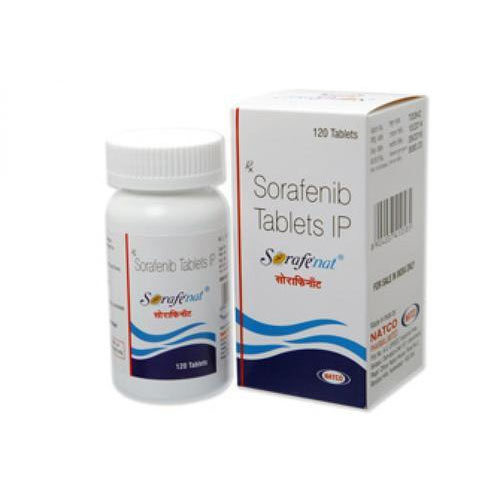
Sorafenat Tablets
8500 INR/Bottle
Product Details:
- Usage For oral use in oncology
- CAS No 284461-73-0
- Assay Not less than 99%
- Dosage 200 mg
- Indication Renal cell carcinoma, Hepatocellular carcinoma
- Pacakaging (Quantity Per Box) 120 tablets per bottle
- Storage Store below 30°C, protect from light and moisture
- Click to View more
X
Sorafenat Tablets Price And Quantity
- 1 Tablet
- 8500 INR/Bottle
Sorafenat Tablets Product Specifications
- Store below 30°C, protect from light and moisture
- 284461-73-0
- Not less than 99%
- For oral use in oncology
- 120 tablets per bottle
- 200 mg
- Renal cell carcinoma, Hepatocellular carcinoma
- C21H16ClF3N4O3
- Pharmaceutical Grade
- Allopathic
- 24 months from manufacture
- Tablet
- Sorafenib Tosylate
- Film-coated Tablets
- Fatigue, rash, hypertension, diarrhea
- High-density polyethylene (HDPE) bottle
- Antineoplastic Agent
- 2 years
- Unique per lot
- 200 mg per tablet
- Light yellow
- India
- Approved by DCGI
- 30049099
- Oral
- Prescription
Sorafenat Tablets Trade Information
- Ahmedabad
- Cash in Advance (CID), Cash Advance (CA)
- 1000 Tablet Per Week
- 1 Week
- Yes
- Within a certain price range free samples are available
- 120 tablets in 1 bottle
- Asia, Australia, North America, South America, Eastern Europe, Western Europe, Middle East, Africa, Central America
Product Description
Sorafenat Tablets
Sorafenat 200mg Tablet should be taken on an empty stomach, but try to have it at the same time every day to get the most benefits. Your doctor will decide what dose is necessary and how often you need to take it. This will depend on what you are being treated for and may change from time to time. You should take it exactly as your doctor has advised. Taking it in the wrong way or taking too much can cause very serious side effects. It may take several weeks or months for you to see or feel the benefits but do not stop taking it unless your doctor tells you to.
Highly Effective Oncology Therapy
Sorafenat Tablets are an advanced antineoplastic treatment specifically indicated for renal cell carcinoma and hepatocellular carcinoma. Each tablet delivers a consistent 200 mg dose of Sorafenib Tosylate, designed to interfere with cancer cell growth. Manufactured according to pharmaceutical grade standards and approved by the DCGI, Sorafenat ensures patients receive a high-quality, reliable therapeutic option in cancer management.
Secure Packaging for Longevity
The tablets are packaged in high-density polyethylene (HDPE) bottles, each containing 120 film-coated tablets. This robust packaging is engineered to protect the contents from moisture and light, ensuring the medicine maintains its stability and efficacy throughout the two-year shelf life. Always store below 30C and seal tightly after use.
FAQ's of Sorafenat Tablets:
Q: How should Sorafenat Tablets be taken for optimal effectiveness?
A: Sorafenat Tablets should be taken orally, as prescribed by your oncologist. They are commonly administered without food for optimal absorption. Always follow the dosing schedule, typically 200 mg per tablet, and consult your healthcare provider before making any changes.Q: What are the main uses and indications for Sorafenat Tablets?
A: Sorafenat Tablets are primarily indicated for the treatment of advanced renal cell carcinoma and hepatocellular carcinoma. They work by inhibiting specific proteins involved in cancer cell growth and are prescribed as part of a comprehensive oncology treatment plan.Q: When should I contact my doctor regarding side effects from Sorafenat?
A: If you experience symptoms such as persistent fatigue, rash, high blood pressure, or diarrhea, you should promptly inform your healthcare provider. These are recognized side effects, but immediate medical attention may be necessary if symptoms worsen or do not improve.Q: Where are Sorafenat Tablets manufactured and can they be exported internationally?
A: Sorafenat Tablets are manufactured in India and are approved for export under HS Code 30049099. They are distributed internationally by authorized suppliers, including exporters, importers, and traders, adhering to regulatory standards.Q: What is the recommended storage process for these tablets?
A: Store Sorafenat Tablets below 30C, away from direct light and moisture, in their original HDPE bottle. Proper storage ensures the medication remains effective up to its expiration date, 24 months from manufacture.Q: What are the main benefits of using Sorafenat Tablets in cancer therapy?
A: Sorafenat Tablets offer a targeted mechanism against cancer cells, potentially slowing disease progression in renal cell and hepatocellular carcinoma. The product's pharmaceutical-grade formulation and DCGI approval assure quality and consistency for patients under professional care.Tell us about your requirement

Price:
Quantity
Select Unit
- 50
- 100
- 200
- 250
- 500
- 1000+
Additional detail
Mobile number
Email

Other Products in 'Anti Cancer Tablets' category






- West Port, 16th Floor, beside: - Taj Skyline Hotel, Sindhu Bhavan Road, Near S.G Highway, Thaltej,Ahmedabad - 380059, Gujarat, India
- Phone : 08045802081
- Mr Rakesh Bhattacharjee (Chief Executive Officer)
- Mobile : 08045802081
-
 schwitzbiotech.b2@gmail.com
 Send Inquiry
 |
SCHWITZ BIOTECH
All Rights Reserved.(Terms of Use) Developed and Managed by Infocom Network Private Limited. |
